
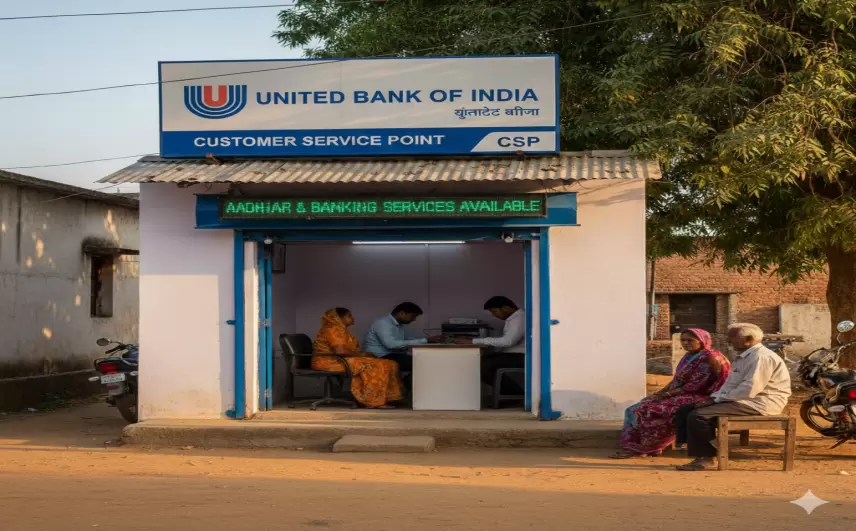
About United Bank of India CSP (Now PNB CSP): Apply Online
Understanding United Bank of India CSP: Financial Inclusion Through Kiosk Banking
United Bank of India (UBI) Customer Service Point (CSP), commonly referred to as Bank Mitra or Kiosk Banking, was a key initiative by the bank to promote financial inclusion in underserved rural and semi-urban areas across India. UBI CSPs allowed authorized agents to provide essential banking services such as cash deposits/withdrawals, account opening, fund transfers, bill payments, Aadhaar-enabled payments (AEPS), and government scheme disbursements. These outlets operated as mini-banks using biometric devices and internet-enabled software, bringing formal banking closer to communities without physical branches.
Important Update: United Bank of India merged with Punjab National Bank (PNB) effective April 1, 2020, along with Oriental Bank of Commerce. Post-merger, all UBI services, including CSP operations, transitioned to Punjab National Bank. Existing UBI CSP agents were integrated into PNB's Business Correspondent network, and new applications now route through PNB channels. As of 2026, anyone interested in similar opportunities should apply for PNB CSP (often still referred to as UBI/PNB CSP in legacy contexts). This ensures continuity of services and commissions under the larger PNB framework.
Steps to Apply for United Bank of India CSP (Now Under PNB)
Since the merger, apply through PNB-authorized providers or aggregators. The process is similar to pre-merger UBI applications:
- Check Eligibility: Be an Indian citizen aged 18+, with at least 10th/12th qualification, basic computer literacy, and a suitable location (preferably rural/semi-urban with 100-200 sq. ft. space). Good local reputation and no criminal record required.
- Gather Documents: Aadhaar card, PAN card, address proof (utility bill/voter ID), educational certificates, passport photos (10+), bank account details, and police verification if needed.
- Choose an Authorized Provider: Contact PNB-approved aggregators (e.g., Oxigen CSP, NICT CSP, Digital India CSP, or PNB's official partners). Avoid unauthorized agents.
- Submit Online Application: Visit the aggregator's website or PNB portal (pnbindia.in) for CSP registration. Fill the form with personal, location, and business details. Upload documents.
- Pay Fees: Initial registration fee typically ₹2,000-₹5,000 (covers setup, training, and device). Varies by provider.
- Verification & Site Inspection: Provider/PNB team verifies documents and conducts a field visit to check location suitability.
- Training & Activation: Attend mandatory training on software, compliance, and services. Receive CSP ID, biometric device, printer, and login credentials (7-15 days total).
- Launch Operations: Set up the outlet with PNB branding. Start transactions and earn commissions via the portal.
Advantages of United Bank of India CSP (Now PNB CSP)
- Steady Income: Earn commissions (₹1-₹10 per AEPS transaction, 0.5-2% on transfers/deposits), with potential monthly earnings of ₹20,000-₹60,000 in high-footfall areas.
- Financial Inclusion Impact: Serve unbanked populations, build community trust, and support government schemes like PMJDY.
- Low Startup Cost: Minimal investment (₹10,000-₹30,000 total) compared to traditional businesses.
- Flexible Schedule: Operate from home/shop, part-time or full-time, with digital tools for efficiency.
- Government-Backed Security: Regulated by RBI/PNB, with biometric security and incentives for account openings.
- Training & Support: Free training, ongoing assistance, and access to PNB's vast network.
Disadvantages of United Bank of India CSP (Now PNB CSP)
- Post-Merger Transition: Legacy UBI agents may face initial integration challenges; new applicants follow PNB rules.
- Income Variability: Earnings depend on location and transaction volume; low in remote areas with poor connectivity.
- Competition & Digital Shift: Rising UPI/apps reduce physical visits; many CSPs compete in the same area.
- Technical Dependencies: Internet outages or device issues can stop operations, especially in rural zones.
- Compliance Burden: Strict RBI audits, KYC norms, and reporting requirements; penalties for violations.
- Limited Scope: No advanced services like loans/insurance; growth capped compared to full branches.